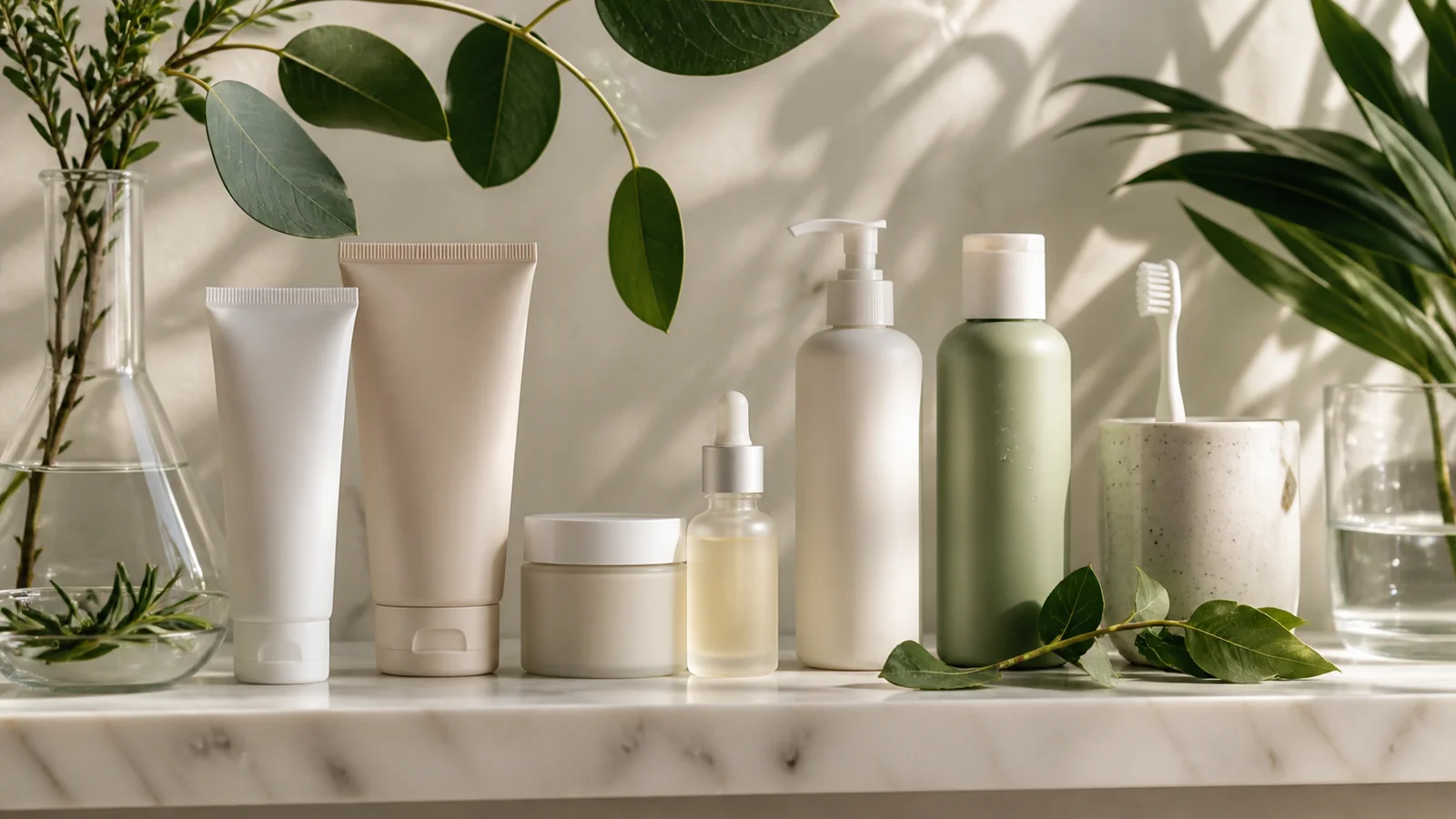
Toothpaste, deodorant, shampoo, soap, sunscreen, moisturiser, makeup, and fragrance come into contact with the body frequently. In most cases the exposures are small, but frequency, site of use, and individual sensitivity can influence which product is most suitable.
Rather than classifying products as "clean" or "toxic", ask what each ingredient does, what benefit it provides, whether it causes irritation, and what is known about dose and route of exposure. A simpler product may suit sensitive skin, but a short ingredient list is not automatic proof of safety or effectiveness.
Toothpaste: fluoride, xylitol, and SLS
Xylitol is not metabolised in the mouth like ordinary sugar and may contribute to caries prevention, although evidence for xylitol-containing products is mixed. It can sit alongside good brushing, less frequent sugar exposure, adequate saliva, and interdental cleaning, rather than replacing them.
Fluoride toothpaste has a well-established local effect in reducing dental caries. At the same time, chronic ingestion of excessive amounts can cause dental fluorosis, and higher exposure can cause skeletal fluorosis. Children should use an age-appropriate amount of toothpaste and be supervised so that they do not swallow it.
Toothpaste choice should reflect individual caries risk, age, drinking water, and brushing habits. Anyone considering a fluoride-free toothpaste, particularly with a history of caries, should discuss the choice with a dentist rather than assume that all fluoride exposure is harmful.
Sodium lauryl sulfate, or SLS, is a foaming agent and foam is not a measure of toothpaste effectiveness. In some people SLS may irritate the mouth or worsen dryness and recurrent ulcers. An SLS-free toothpaste is a reasonable trial when these symptoms are present.
Deodorant and antiperspirant: odor is not the same as sweat
Deodorants reduce odour, usually by affecting bacteria or adding fragrance. Antiperspirants reduce sweat with aluminium salts that temporarily block sweat ducts. Current evidence has not established a link between ordinary antiperspirant use and breast cancer. Choosing an aluminium-free or fragrance-free product is reasonable for personal preference or skin tolerance, but it is not a general medical requirement.
Products marketed as natural can also irritate the skin. Essential oils, baking soda, and some preservatives may cause burning or dermatitis, especially after shaving. The practical measure is tolerance: a product that controls odour or sweat without causing a local reaction.
Cosmetics and soap: protecting the skin barrier
The skin is a living immune and barrier organ. Harsh soaps, frequent exfoliation, alcohol-heavy products, fragrance, detergents, and over-washing can damage that barrier. When the skin is already irritated, adding more products may prolong rather than solve the problem.
Sensitive skin may do better with a simpler product, an appropriate pH, fewer irritants, and enough moisturising lipids to support the barrier. A product marketed as clean may still contain fragrance or plant extracts that trigger irritation.
Sunscreen: the best product is one used correctly
Mineral sunscreens use zinc oxide or titanium dioxide, while other products use organic filters such as oxybenzone, octocrylene, and homosalate. FDA studies found that some organic filters are absorbed into the bloodstream, but absorption does not prove harm and is not a reason to stop using sun protection. It does support continued research and clear ingredient information.
SPF mainly reflects protection from UVB-related sunburn. Protection from UVA, which contributes to skin ageing and pigmentation, requires a product labelled broad spectrum. Zinc oxide is a useful broad-spectrum option for people who prefer a mineral filter or whose skin reacts to other filters.
For those who choose a mineral sunscreen, a fragrance-free formula with a texture that can be applied generously may work well. Sprays should be used carefully to avoid inhalation. With any sunscreen, adequate application, reapplication, and broad-spectrum coverage matter more than a natural label. Clothing, hats, shade, and reducing exposure during intense sunlight complete the strategy.
Practical principles
Choose a product according to the job it needs to do, the quality of evidence, frequency of use, and personal response. Less fragrance and fewer irritants may help sensitive skin; fluoride use should reflect caries risk; and a broad-spectrum sunscreen that is applied properly is better than an ideal-looking product that remains in the bottle.
References used for fact-checking
- American Dental Association: Fluoride
- National Academies: Fluoride in drinking water, exposure and toxicity
- Cochrane Review: Xylitol for preventing dental caries
- Journal of Oral Pathology & Medicine: SLS and recurrent aphthous stomatitis review
- National Cancer Institute: Antiperspirants, deodorants and breast cancer
- U.S. FDA: Absorption of sunscreen active ingredients into blood
- U.S. FDA: Sunscreen and sun protection
- U.S. EPA: VOCs and indoor air quality