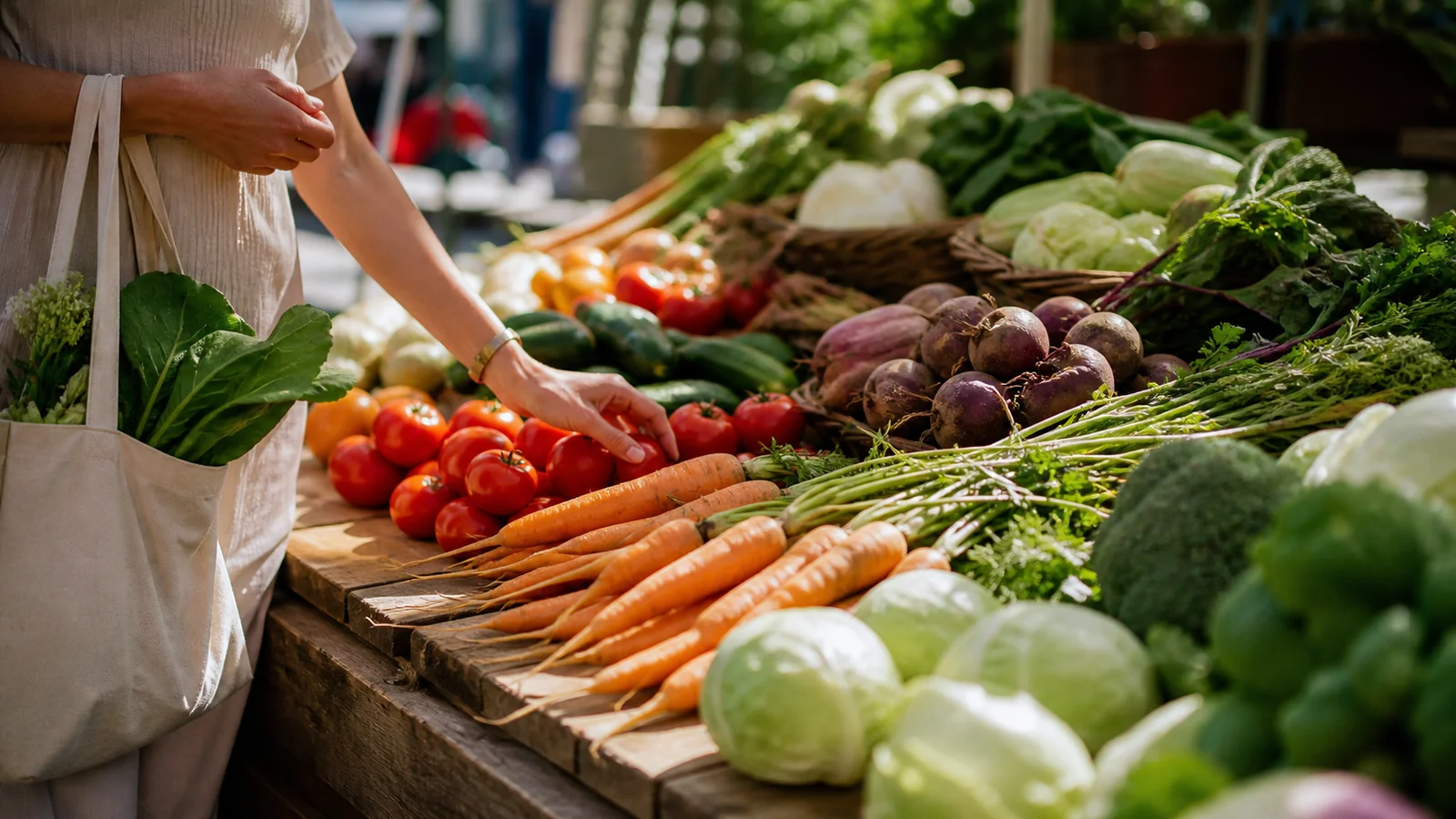
Organic food is produced under a different set of rules, particularly around pesticides, fertilisers, animal feed and routine antibiotic use. Those standards may alter exposure and production conditions, but the label alone does not guarantee greater nutritional value or make every conventional product a poor choice.
Someone who eats very few vegetables will benefit from adding vegetables first, even when organic options are unaffordable. The next step is to prioritise foods eaten frequently, produce that is difficult to wash well and cases in which production standards matter most. This is a practical way to improve diet quality when buying everything organic is not realistic.
Pesticide residues in fruit and vegetables
Organic agriculture reduces many synthetic pesticide inputs, but it does not guarantee residue-free food. Drift from nearby fields, soil, water and substances allowed in organic agriculture may still contribute. Conventional produce is regulated and pesticide tolerances are set by authorities, but the same level of exposure may not have the same relevance for everyone. Children, pregnant women, farm workers, people with chemical sensitivity and those who eat the same potentially higher-residue food every day may warrant more careful consideration.
A simple order of priority is useful: start with foods eaten every day, thin-skinned produce and items that are difficult to wash. The difference may matter less for foods that are peeled or eaten rarely. Washing produce and maintaining variety remain useful either way.
Meat and animal foods
For animal foods, the organic label also reflects rules around feed, husbandry and restrictions on routine antibiotics and growth hormones. That tells us something about production. It does not make unlimited meat healthy or guarantee nutritional superiority in every measure.
The diet as a whole matters more than the label alone. Consider protein adequacy, processing, cooking method and what accompanies the animal food. Organic sausage remains processed meat, and conventional vegetables remain vegetables.
Consider the diet as a whole
A diet built from whole foods, adequate protein, vegetables, legumes, fibre and appropriate fats already provides a strong foundation. Organic choices can improve parts of that diet, but they are not a prerequisite for eating well. A limited budget does not prevent good food decisions.
Diet quality is established over time. The foods eaten every day, quantity, variety, processing and repeated exposure matter more than any single purchase. It therefore makes sense to spend first on products that regularly appear in the diet.
A practical order of priority
Begin with a varied diet based largely on whole foods. Within that pattern, prioritise organic options for foods eaten often, produce for which residues are harder to reduce and animal foods when production standards matter. Frequency, likely exposure and budget determine where to begin.