Microplastics and nanoplastics are not the same
Microplastic is a broad name for plastic particles smaller than five millimetres. Nanoplastics are far smaller, often below one micrometre. The smaller the particle, the harder it is to measure, identify by polymer and track in the body. Reported particle counts therefore depend heavily on the analytical method and its detection limit.
A 2024 study used a highly sensitive imaging technique to test bottled water from three brands. The researchers estimated an average of roughly 240,000 microplastic and nanoplastic particles per litre, most of them in the nanoscale range. This is important, but it is not a global average for every bottle. Only a small number of brands were tested, and the new method still requires wider validation.
Why heat changes the picture
Plastic is not one material. Polypropylene, polyethylene, polystyrene and polyamide behave differently. The age of a container, scratches, fat, acidity, contact time and temperature can all affect release. Heat does not necessarily create a new substance, but it can accelerate the movement of particles and other compounds out of packaging.
In a study of food containers and reusable baby-food pouches, microwave heating produced the greatest release among the tested conditions. Some samples released millions of microplastic and billions of nanoplastic particles per square centimetre after three minutes. Those numbers cannot be applied to every container or meal because the study used particular products and food simulants. They do provide a sensible reason not to microwave food in plastic when glass or ceramic is available.
A tea bag can also be a plastic product
The widely reported tea-bag study did not test every paper bag on the market. It tested silky-looking bags made from plastic. When steeped in near-boiling water, they released billions of particles into a cup. You can keep drinking tea while checking the bag material and considering loose leaves, a stainless steel infuser or a bag with clearly disclosed components.
Has microplastic been proven to cause disease?
Plastic particles have been detected in blood, lungs, the digestive tract and reproductive tissues. Cell and animal models suggest possible pathways involving inflammation, oxidative stress and disruption of biological barriers. A crucial link is still missing: long-term human studies that measure realistic exposure, distinguish particle types and sizes, and show which dose causes which outcome.
The US Food and Drug Administration states that current evidence does not demonstrate that the levels detected in food pose a risk to human health. This is not proof that the particles have no effect. It is an acknowledgement that detection has advanced faster than risk assessment. The sensible position is to follow the evidence, reduce obvious exposures and avoid building a diagnosis around the mere presence of particles.
Where to begin in the kitchen
Start with heat. Move food to glass or ceramic before heating. Avoid pouring boiling liquids into disposable plastic, and do not leave bottled water in a hot car when that can be avoided.
Replace worn containers next. A scratched, cloudy or crumbling container should no longer hold food. Glass, stainless steel or suitable ceramic are better choices for hot, fatty or acidic foods.
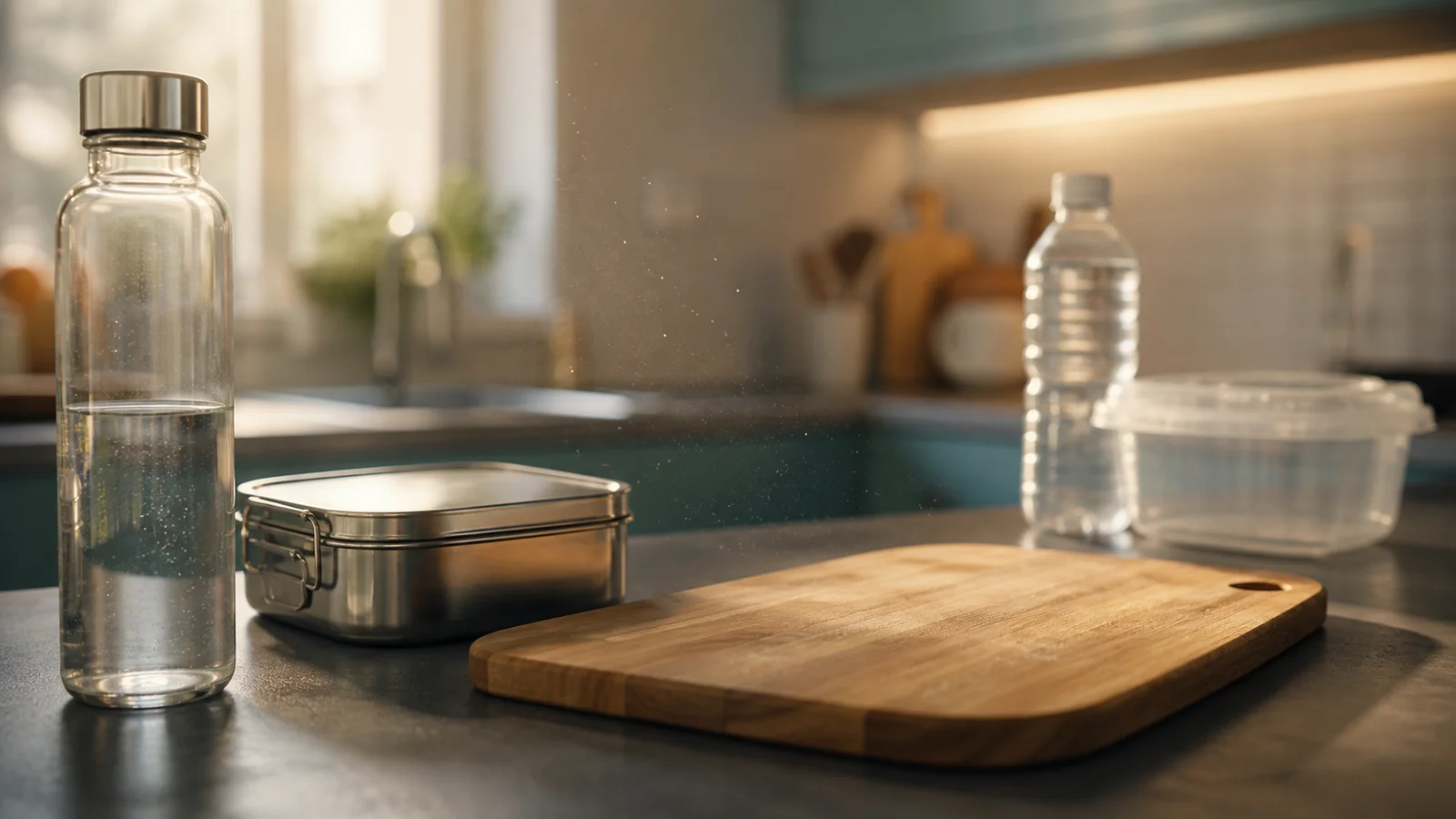
Choose bottles and tea bags carefully. A reusable glass or stainless steel bottle reduces reliance on disposable plastic. Tap-water quality varies, so choose a filter according to local water data and a real need rather than a generic promise. For tea, use loose leaves or verify the bag material.
Do not throw away the entire kitchen. Brief cold contact in an intact container is not the same as repeatedly heating a scratched one. Priorities matter more than perfection. Heat, wear, contact time, fat and acidity are reasonable places to begin.
What about detoxification?
No supplement, tea or treatment has been shown to remove microplastics from the human body. The liver, kidneys, gut and lungs handle substances in different ways, but that does not prove that a commercial detox product removes plastic particles. Reducing a repeated source is more direct than chasing a product claimed to bind everything.
What to remember
Exposure to microplastics is real, while the clinical harm from everyday levels is still poorly mapped. There is no reason for panic, and no need to wait for perfect certainty before making simple changes. Avoid heating food in plastic when an alternative is available, replace damaged containers, choose a reusable glass or stainless steel bottle, and check what a tea bag is actually made from.
Research and sources
- US Food and Drug Administration: microplastics and nanoplastics in foods
- Qian et al.: imaging and identification of nanoplastics in bottled water
- Hussain et al.: particle release from food containers during heating and normal use
- Hernandez et al.: particle release from plastic tea bags
- NIH: plastic particles in bottled water and the new detection method