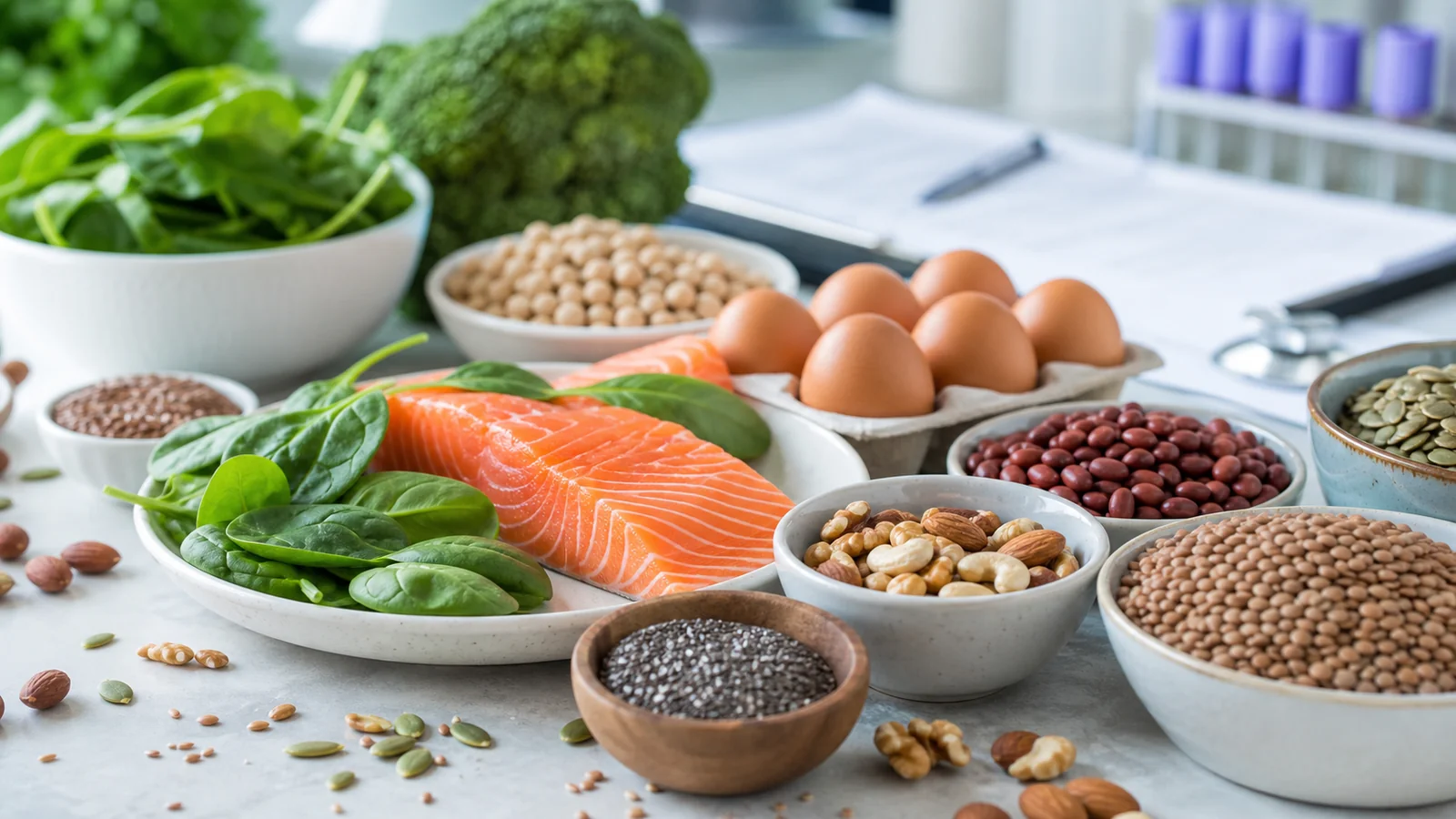
Energy production, muscle function, nervous system activity, blood formation, and immune function all depend on nutrients obtained from food. When an essential nutrient remains low over time, function may be affected even without an obvious sign pointing to the cause.
Deficiencies may contribute to fatigue, slow recovery, muscle weakness, altered sensation, skin changes, or reduced exercise tolerance, but these symptoms are not specific to one nutrient. They should be interpreted alongside diet, medical history, medication use, and appropriate testing rather than treated as proof of a deficiency.
Omega-3 and inflammation regulation
EPA and DHA are used to produce signalling molecules involved in the regulation and resolution of inflammatory responses. People who eat little fish or seafood, or whose diets lack variety, may have a low omega-3 intake. Before using a supplement, consider the wider diet, medication use, and bleeding risk.
Magnesium and the nervous system
Magnesium participates in hundreds of enzymatic reactions, including processes involved in energy production, muscle contraction and relaxation, nervous system function, glucose regulation, and blood pressure. Low intake may contribute to cramps, fatigue, or weakness, but symptoms such as tension and poor sleep have many possible causes and cannot diagnose a deficiency on their own.
Vitamin D, immunity and muscle function
Vitamin D contributes to calcium regulation, bone health, muscle function, and immune signalling. Low status is more common in people with limited sun exposure, darker skin, obesity, malabsorption, older age, or use of certain medications. When deficiency is plausible, a blood test is more useful than guessing the dose.
Vitamins A and E: membranes, skin and antioxidant defence
Vitamin A is important for epithelial tissue, immune function, and vision. Deficiency can be clinically significant, but excessive preformed vitamin A can be toxic, especially during pregnancy. Vitamin E helps protect cell membranes from oxidative damage, although high-dose supplementation is not automatically beneficial. Both are fat-soluble vitamins and can accumulate in the body.
Zinc, iron and B12
Zinc contributes to immune function, wound healing, taste, skin health, and barrier integrity. Iron is essential for oxygen transport, while B12 is required for nervous system function and normal red blood cell production. Low status may result from diet, bleeding, absorption problems, medication use, intestinal inflammation, or autoimmune conditions. The cause should be investigated rather than treated with an arbitrary supplement.
Clinical takeaway
Nutrient deficiencies do not explain every symptom, but they are an important part of a structured assessment. The sensible approach is to investigate plausible deficiencies, understand why they developed, and correct them at an appropriate dose rather than assuming that more is always better.